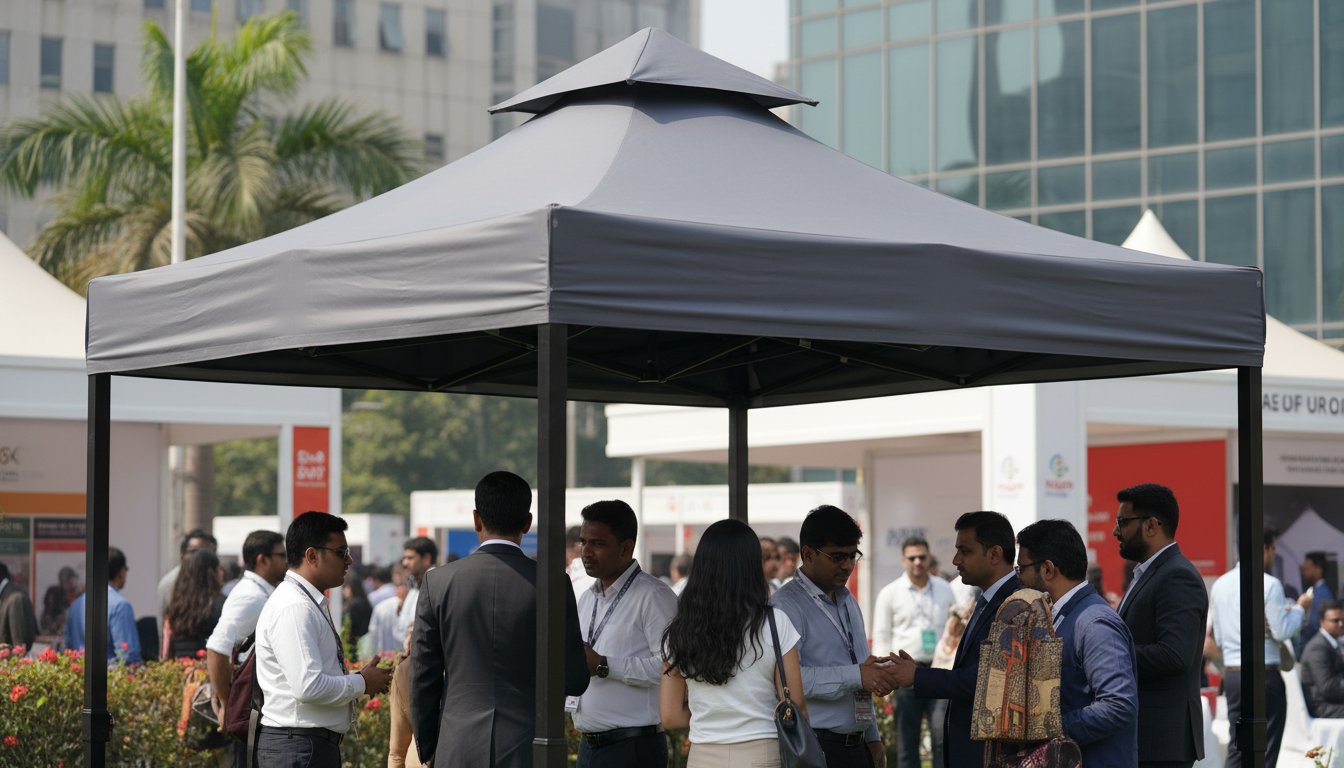
Whether you’re planning for an outdoor exhibition, a promotional event, or a corporate gathering, a gazebo tent is an essential piece of equipment. But with so many options available, choosing the right one can feel overwhelming. This comprehensive guide will walk you through everything you need to know about gazebo tents, from frame materials and fabric types to choosing the perfect size for your next event, ensuring you make a confident and informed decision.
What is a Gazebo Tent and How Is It Used?
A gazebo tent is a portable, freestanding outdoor shelter designed to provide protection from the sun and light rain. Its structure consists of a collapsible frame and a fabric roof, making it easy to transport and set up at various locations. Unlike permanent garden gazebos, these tents are built for temporary use, offering flexibility and convenience.
Their primary purpose is to create a defined, sheltered space. Common applications are incredibly diverse, including trade show booths, farmers’ market stalls, corporate brand promotions, outdoor festivals, garden parties, and sporting events. They offer a professional and practical solution for any outdoor activity where shelter is needed.
Key Components of a Modern Gazebo Tent
Understanding the main parts of a gazebo tent helps in evaluating its quality and functionality:
- The Frame: This is the collapsible skeleton that gives the tent its shape and stability. It’s typically made from steel or aluminium and designed for quick, tool-free assembly.
- The Canopy: The fabric roof is the most visible part of the tent, providing shelter from the elements. The quality of the fabric determines its durability and weather resistance.
- Optional Sidewalls: Many gazebo tents can be equipped with full or half-height sidewalls. These attach to the frame to provide extra protection from wind and rain, create a more enclosed space, and offer valuable extra real estate for branding.
Gazebo Tent vs. Pop Up Tent: What’s the Difference?
You will often hear the terms “gazebo tent” and “pop up tent” used to describe the same product. While they are largely interchangeable, there can be subtle distinctions. A gazebo tent often implies a more robust, heavy-duty frame structure suitable for commercial and professional use. The term “pop up tent” might sometimes refer to smaller, more lightweight designs intended for recreational activities like camping or beach trips. However, in the context of events and exhibitions, both terms generally refer to the same style of collapsible shelter.
How to Choose the Right Gazebo Tent: A Buyer’s Guide
Before you invest in a gazebo tent, it’s crucial to assess your primary needs. Consider where you’ll be using it, how often, and under what conditions. Balancing your budget with the need for durability, portability, and key features will lead you to the perfect choice for your business.
Frame Material: Steel vs. Aluminium
The frame is the foundation of your tent, and the material it’s made from significantly impacts its weight, stability, and longevity.
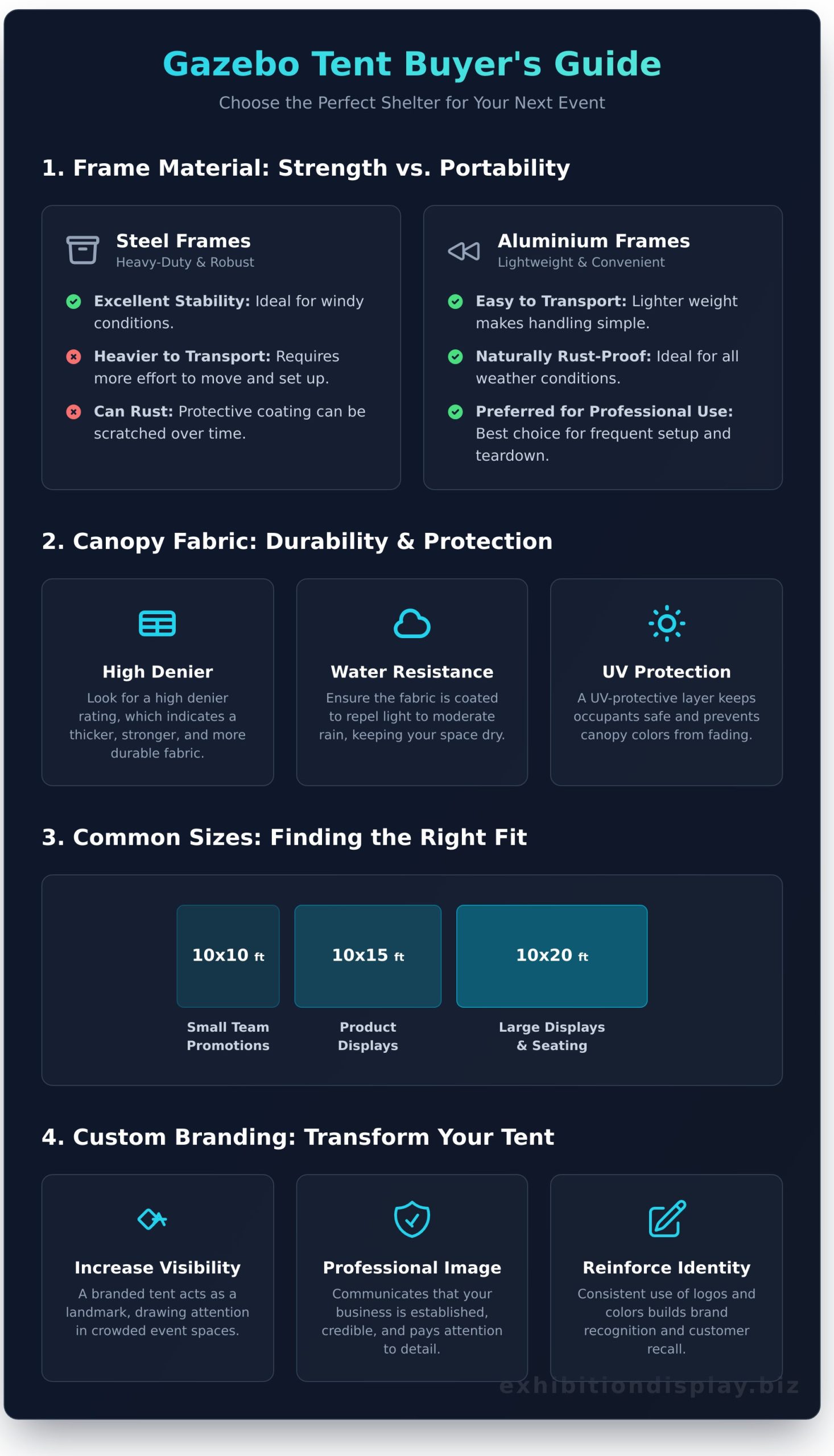
- Steel Frames: These are known for being heavy-duty and providing excellent stability, making them a good choice for windy conditions. However, they are heavier to transport and can be prone to rust if the protective coating gets scratched.
- Aluminium Frames: Lighter than steel, aluminium frames are much easier to transport and handle. They are also naturally rust-proof, which is a major advantage for use in damp climates. For frequent professional use where portability is key, a high-quality aluminium frame is often the preferred choice.
Canopy Fabric: Durability and Weather Resistance
The canopy fabric must be tough enough to withstand repeated use and exposure to the elements. Common materials include polyester and vinyl, each with different properties. When choosing, look for a fabric with a high denier (a measure of thickness), as this indicates greater strength. It’s also essential to check for protective coatings that make the fabric waterproof or at least water-resistant. Furthermore, a canopy with a UV-protective layer will not only keep people safe from harmful sun rays but also prevent the fabric colour from fading over time.
Size and Portability: Finding the Right Fit
Gazebo tents come in several standard sizes to suit different needs. The most common dimensions in India are 10×10 ft (3x3m), 10×15 ft (3×4.5m), and 10×20 ft (3x6m). To choose the right size, consider how many people or what products you need to fit comfortably underneath. A 10×10 ft tent is perfect for a small promotional team, while a 10×20 ft tent can accommodate a larger display or a small seating area. Always check the packed weight and dimensions to ensure it will fit in your vehicle and can be managed by your team. If you are unsure about the best size for your specific event needs, Contact our experts for guidance.
Branding and Customization for Professional Use
While a plain gazebo tent provides essential shelter, a custom-branded one transforms it into a powerful marketing asset. For any business looking to make a professional impression, custom printing is not just an option—it’s a necessity. It elevates your presence from simply being at an event to actively marketing your brand.
Why Custom Printing Matters for Your Brand
Investing in a custom-printed gazebo tent offers several key advantages for your business:
- Increases Visibility: A brightly coloured tent with a clear logo acts as a landmark, drawing attention and helping potential customers find you in a crowded event space.
- Creates a Professional Image: A professionally branded shelter communicates that your business is established, credible, and pays attention to detail.
- Reinforces Brand Identity: Consistent use of your logos, colours, and taglines across all marketing materials, including your tent, builds brand recognition and recall.
What Can Be Customized on a Gazebo Tent?
High-resolution digital printing allows for vibrant, full-colour graphics on multiple parts of the tent:
- Canopy Top: The entire roof can be printed with large logos, brand colours, and key messages.
- Valance Panels: The overhanging edges of the canopy are perfect for displaying your website, phone number, or a simple tagline.
- Full and Half Sidewalls: These offer large canvases to create a complete, immersive brand experience with detailed graphics, product images, or promotional information.
A fully customized tent ensures your booth is unmissable and presents a polished, cohesive brand message to every visitor. Ready to make an impact at your next outdoor event? Explore our custom printed gazebo tents.
Frequently Asked Questions
How much wind can a gazebo tent withstand?
The wind resistance of a gazebo tent depends heavily on the quality of its frame, its weight, and how securely it is anchored. Professional-grade tents with robust frames can handle moderate winds, but it is always crucial to use leg weights or stakes to secure them properly. For very windy conditions, using additional features like wind bars can increase stability.
Are gazebo tents fully waterproof?
Most high-quality gazebo tents are water-resistant, meaning they will repel light to moderate rain effectively. For a tent to be considered fully waterproof, it needs to have features like sealed seams in addition to a coated fabric. Always check the product specifications for its water-resistance rating.
How long does it take to set up a gazebo tent?
One of the main advantages of a modern gazebo tent is its quick setup. For most standard sizes, two people can typically assemble the tent in 5 to 15 minutes without any tools. The collapsible frame simply expands and locks into place.
Can one person assemble a gazebo tent alone?
While it is possible for one person to set up a smaller 10×10 ft tent, it is much easier and safer with two people. Working with a partner prevents the frame from being twisted or damaged during expansion and makes lifting the canopy into place much simpler.
What is the best way to clean and store my gazebo tent?
To clean your tent, use a soft brush with mild soap and cold water. Avoid harsh detergents or bleach, as they can damage the fabric’s protective coatings. Most importantly, ensure the canopy is completely dry before folding and storing it in its carry bag to prevent the growth of mould and mildew.
Choosing the right gazebo tent is a critical investment for any business that participates in outdoor events. By focusing on a quality frame, durable fabric, and professional branding, you can create a powerful tool that not only provides shelter but also enhances your brand’s visibility and credibility. With over 15 years of experience, we provide premium quality solutions with high-resolution printing to ensure you stand out. View Our Professional Range of Gazebo Tents today and find the perfect shelter for your business.
Leave a Reply